
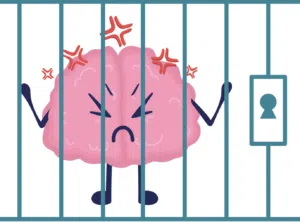
If you are irritable most of the time and cannot seem to come down, there is a reasonable chance you are not actually an angry person. Instead, you may be carrying grief or hidden grief that has had nowhere to go, or a low-grade depression with no outlet.
Many individuals struggle with hidden grief that manifests as anger without understanding its true roots. Many symptoms often attributed to anger may actually stem from hidden grief. Hidden grief can complicate emotional responses, making them harder to manage. Recognizing hidden grief is essential for effective anger management strategies. Understanding the presence of hidden grief can clarify emotional responses. Addressing hidden grief allows for emotional breakthroughs and healthier relationships. Often, hidden grief is the root cause of ongoing irritability and frustration.
By addressing hidden grief, individuals can find healthier ways to express their emotions. Therapists often explore hidden grief to uncover deeper emotional issues. Anger can be a mask for hidden grief, preventing individuals from healing. Addressing hidden grief is crucial for emotional healing and well-being.
It is important to differentiate between normal anger and anger fueled by hidden grief. Processing hidden grief can lead to healthier expressions of emotions. Hidden grief often gets overlooked in discussions about emotional health. Many people don’t realize they are dealing with hidden grief rather than simple anger issues. Understanding hidden grief helps in recognizing the underlying emotions that fuel anger. Recognizing hidden grief can be the first step in addressing emotions that often surface as anger.
We aren’t trying to make anger sound nicer. It is a clinical observation with practical consequences: if the engine is grief and you treat it as an anger problem, you will work hard on the wrong thing and conclude you failed. For many who have recognized they are angry too often or it’s causing problems in their relationships, you may have tried typical anger management strategies. They work in the moment, but don’t move the needle in terms of reducing the number of angry outbursts.
Is It Anger — or Is It Grief You Haven’t Had Anywhere to Put?
Here’s a brief video related to this topic:
Why grief so often shows up as anger
Grief is not a single emotion with a predictable shape. Sadness is the version that gets depicted. It is not the only version, and for a lot of people it is not the main one.
The American Psychiatric Association’s own description of grief includes “anger, bitterness, sorrow” among the forms intense emotional pain takes after a loss. Anger is not a detour around grief. It is one of grief’s native languages.
There is also a practical reason it dominates. Sadness requires something anger does not: somewhere safe to put it down. Sadness is a lowering of defenses. If lowering your defenses has never felt like a good idea — because no one was available, because you were the one holding things together, because it was not welcome in your house — the system routes around it. Anger keeps you upright. It does not ask anyone for anything.
What it looks like day to day
Most people in this pattern do not think of themselves as grieving. They think of themselves as having a short fuse lately. Some of the ways it shows up:
- A flare that is bigger and faster than the moment called for, followed by not recognizing yourself.
- Low-level contempt for people who seem to be coping fine.
- Snapping at the safest person in your life, usually a partner or a kid.
- Restlessness, and a sense that other people are moving too slowly.
- Flatness where interest used to be, punctuated by irritation.
- Fatigue that sleep does not fix.
- A story that the world has gotten stupider and more irritating, rather than that something in you has shifted.
That last one matters. Grief-driven anger usually points outward and feels entirely justified from the inside. That is not a character flaw; it is how the protection works.
Grief is not only about death
A common reason people rule this out is that nobody died.
Losses that generate real grief include the end of a relationship, a friendship that quietly stopped, a career that went somewhere you did not choose, a diagnosis, a move, an estrangement, a version of your life you had planned for and are not going to get, and childhood experiences where something that should have been there was not. Grief follows loss, and loss is broader than bereavement.
It also stacks. Several unmourned losses in a row, none of them individually large enough to justify stopping, is one of the most common presentations we see. So this might look like a beloved dog passing and you go straight back to work. A friend moves away and you don’t recognize the impact on your relationship. So many types of changes create grief. So many of us just move on without actually working through it.
Why this hits men hard
The National Institute of Mental Health lists “anger, irritability, or aggressiveness” and “engaging in high-risk activities” among the ways mental health conditions can present in men. NIMH also notes that men are less likely than women to have received mental health treatment in the past year, and more likely to die by suicide.
Read those together and a pattern emerges: the presentation that is most socially permitted for men is also the one least likely to be read as distress — by other people, and by the man himself. Anger reads as a personality. Sadness reads as a problem to bring somewhere. So the thing that would get help looks like the thing that needs help least.
A fair caveat: NIMH documents the presentation, not the cause. Cultural expectations about male vulnerability are a plausible explanation, and a widely held one, but that specific causal link is not what the citation establishes.
When grief becomes something more
Grief is not a disorder. Most grief, however brutal, does not require treatment — it requires time, support, and permission.
There is a threshold, though. In March 2022 the DSM-5-TR added prolonged grief disorder: for adults, a death at least twelve months ago, with at least three symptoms present nearly every day for at least a month, causing significant distress or impairment. The APA estimates this affects roughly 4% to 15% of bereaved adults.
Two things follow. Most grieving people do not have a disorder, and a meaningful minority do — and they are not helped by being told to give it more time.
Why “work on your anger” doesn’t work here
Anger management skills are real skills. Used on grief-driven anger, they tend to produce someone who is just as activated but quieter about it. The heat goes underground and comes out as contempt, withdrawal, drinking, or an exhausting effort to keep the lid on.
What changes the pattern is addressing what is under it. Broadly, in this order:
- Capacity first. Being able to feel something without being flattened by it. For people whose anger has been the only permitted emotion for decades, this stage is genuinely difficult and it is where the work actually starts.
- Then naming. Losses that never got acknowledged get named as losses — not as failures, not as things you should be over.
- Then processing. Where a loss is tangled with traumatic material — a sudden death, a violent one, one you witnessed, one wrapped in guilt — that material can be processed rather than only discussed.
On that last point, a precision worth holding: EMDR’s evidence base is for PTSD, not for grief itself. The VA’s National Center for PTSD counts 38 randomized controlled trials, reports moderate to strong effects, and notes EMDR carries the highest recommendation across most clinical practice guidelines, including the VA/DoD guideline, ISTSS, and NICE, while the American Psychological Association gives it a conditional rating. What EMDR can address is unresolved traumatic material that may be sitting alongside a loss and keeping the whole system on alert. It is not a treatment for mourning, and grief is not something to be eliminated.
Where to start
If you have been irritable for long enough that people have started adjusting around you, that is information. So is the fact that you are still reading.
You do not need to have a name for the loss. You do not need to be sure it qualifies. You do not need to be ready to talk about it in the first session.
Hope For The Journey Collective offers trauma-informed therapy and EMDR in Austin and Round Rock, and by telehealth throughout Texas. Client fees, donations, and grants fund reduced-rate spots, so what you pay does not determine the quality of care you receive or which therapist you are matched with. Reach out when you’re ready.
Frequently Asked Questions
Can grief really show up as anger instead of sadness?
Yes. The American Psychiatric Association’s description of grief includes anger and bitterness among the forms intense emotional pain takes after a loss. Anger is not a substitute for grief or a sign you are grieving wrong — for many people it is the most accessible version, particularly when sadness has never had a safe place to go. Hidden grief often manifests in this way.
How do I know if my irritability is grief and not just my personality?
A few markers are worth noticing: whether the irritability has a start date, whether it tracks with something you lost, whether it is worse around anniversaries, and whether it coexists with fatigue and flatness. A therapist can help sort this out; the pattern is often clearer from the outside than from inside it.
Do I have to have lost someone for this to apply?
No. Grief follows loss of many kinds — relationships, careers, health, plans, estrangements, and childhood experiences in which something that should have been present was not. Multiple smaller losses with no space to process any of them is one of the most common presentations.
What is prolonged grief disorder?
It was added to the DSM-5-TR in March 2022. For adults, it requires a death at least twelve months earlier, with at least three symptoms present nearly every day for at least a month, causing significant distress or impairment. The APA estimates it affects roughly 4% to 15% of bereaved adults. Most grief does not meet this threshold.
Will EMDR help with grief?
EMDR’s evidence base in research is for PTSD, not grief itself. Where a loss is entangled with traumatic material — a sudden or violent death, something you witnessed, something carrying guilt — EMDR can process that material. The goal is not to remove grief but to reduce what is keeping the nervous system on alert.
Why are men more likely to present this way?
NIMH documents that anger, irritability, and aggressiveness are among the ways mental health conditions present in men, and that men are less likely to have received treatment. Cultural expectations about male vulnerability are a widely held explanation, though NIMH documents the pattern rather than establishing the cause.
Sources
- American Psychiatric Association. Prolonged Grief Disorder. org/patients-families/prolonged-grief-disorder”>https://www.psychiatry.org/patients-families/prolonged-grief-disorder
- National Institute of Mental Health. Men and Mental Health. gov/health/topics/men-and-mental-health”>https://www.nimh.nih.gov/health/topics/men-and-mental-health
- Beauvais, D., McCarthy, E., Norman, S., & Hamblen, J. L. Eye Movement Desensitization and Reprocessing (EMDR) for PTSD. U.S. Department of Veterans Affairs, National Center for PTSD. asp”>https://www.ptsd.va.gov/professional/treat/txessentials/emdr_pro.asp
- U.S. Department of Veterans Affairs, National Center for PTSD. Common Reactions After Trauma. https://www.ptsd.va.gov/understand/isitptsd/common_reactions.asp
Match with a therapist